Guide
Can i get implants with bone loss?
Yes, many people with bone loss can still get dental implants, but the answer depends on how much bone is left and where it is. A dentist or oral surgeon can check options like bone grafting, and it is normal to get a second opinion.
Short answer
Bone loss does not always rule out implants. In many cases, a provider can still place implants by building up the bone first or by using a different implant plan.
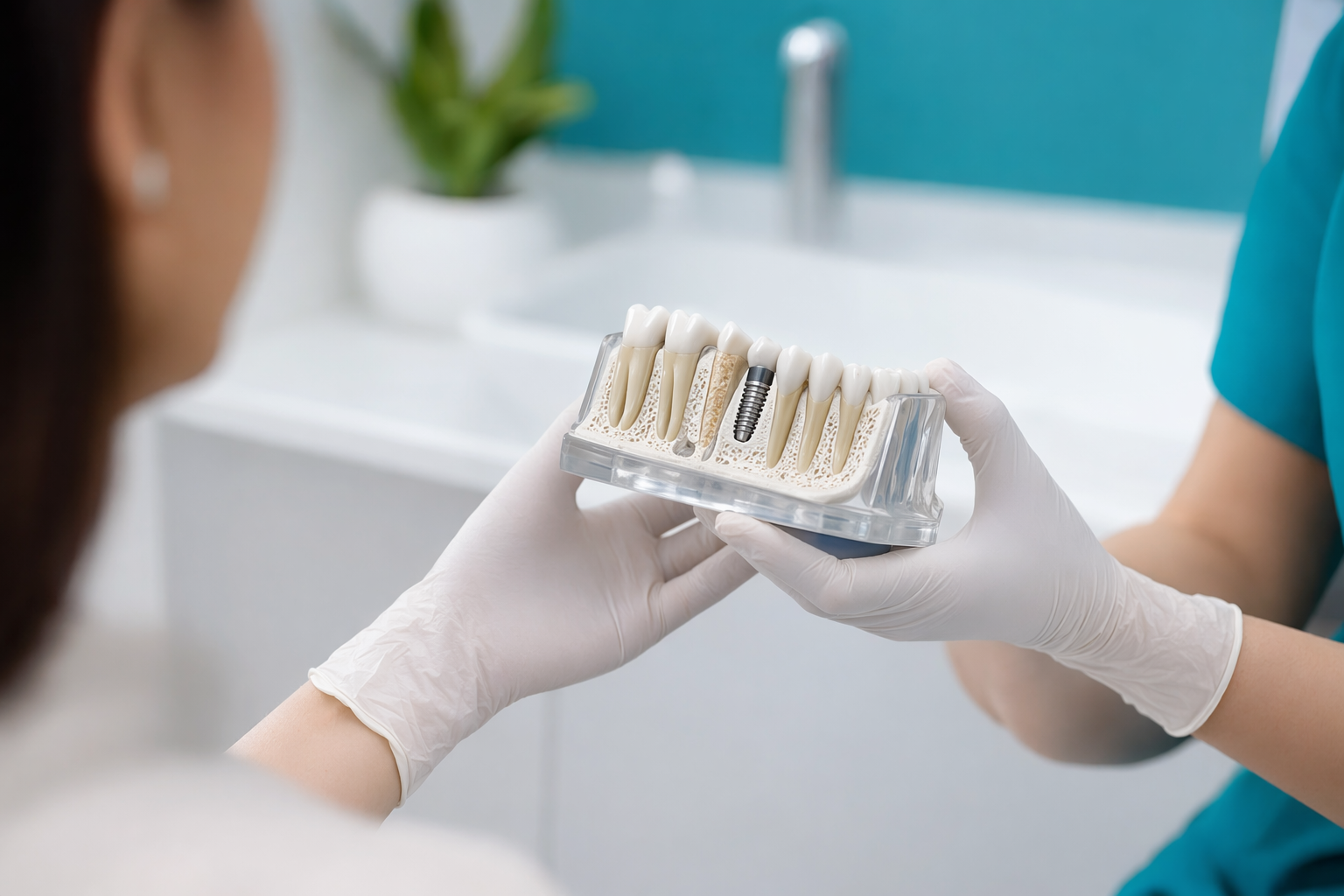
Bone loss means there is less jawbone available to hold the implant. A dental implant is a small metal post placed in the jawbone to act like a tooth root. For the implant to work, it needs enough healthy bone to support it.
Clarity Implants is a free matching service, not a dental provider. We help people find implant providers and understand general options in plain language.
What providers may look at
A provider usually checks how much bone is present, where the missing teeth are, and whether nearby teeth or sinuses affect the plan. They may use an exam, X-rays, or a 3D scan to see the bone shape more clearly.
If there is not enough bone, they may talk about a bone graft. A bone graft is a procedure that adds bone or bone-like material to help create a stronger base for an implant. In some cases, the provider may suggest a different type of implant plan if that is a better fit.
This is why the same answer can be different from one person to another. Bone loss in the front of the mouth is not the same as bone loss in the back, and upper and lower jaws can have different needs.
Common options when bone is thin
Some people need a bone graft before the implant. Others may need the graft and then wait for healing before the implant is placed. In some cases, the implant and graft are done in stages. The timing depends on the case and the provider’s plan.
You may also hear words like "osseointegration," which means the implant fuses with the bone. This is the healing process that helps the implant stay stable over time. If the bone is too weak or too thin, that process can be harder.
It is okay to ask a provider to explain the plan in simple words. A good office should be able to tell you why they recommend one approach over another.
What it may cost
Costs vary a lot when bone loss is involved, because extra steps can add to the total. In the US, a single implant all-in is often around $1,500-$6,000 as a typical range, but the real price depends on the city, the provider, and whether bone grafting or other work is needed.
If you are replacing several teeth, an implant bridge or similar plan may run roughly $3,000-$15,000. A full-arch option like All-on-4 is often around $20,000-$50,000 per jaw, again depending on the case and location.
These are estimates only, not quotes or guarantees. Insurance and Medicaid coverage vary by state, and many patients ask about payment plans. It is reasonable to compare offices and ask for a written treatment estimate.
How to choose the right provider
When bone loss is part of the picture, experience matters. You may want a provider who explains the bone situation clearly, shows options, and does not rush you into a decision.
A second opinion is normal, especially for a big and expensive treatment. You can use guides on implants to learn the basics, read about how pricing works, and see how to choose an implant provider.
If you want help finding options in your own language, you can get matched. Clarity Implants is free for patients, and we help you connect with providers without collecting medical records or giving dental advice.
Bone loss does not always stop you from getting implants, but it may mean you need extra steps like a bone graft and a careful treatment plan.
Questions people ask
Can I still get implants if I have bone loss?
Often, yes. Many people with bone loss can still get implants, but some need a bone graft or a different treatment plan first.
Do I need a bone graft before an implant?
Not always. A provider may recommend a bone graft if there is not enough bone to support the implant, but the right plan depends on the case.
Does bone loss make implants more expensive?
It can. Extra procedures like bone grafting may add cost, so the final price is often higher than a simple implant case.
Is there a way to know before I visit an office?
Not with certainty. A provider usually needs an exam and imaging, such as X-rays or a 3D scan, to see how much bone is available.
Can I find implant care in my language?
Yes, often you can. Clarity Implants helps people find providers and information in the language they are most comfortable with.
Keep reading
How Much Do Dental Implants Cost?
How Much Do Dental Implants Cost? — clear, honest information for people comparing dental implan
Read moreGuideHow to Pay for Dental Implants (Financing)
How to Pay for Dental Implants (Financing) — clear, honest information for people comparing dent
Read moreGuideDoes Insurance Cover Dental Implants?
Does Insurance Cover Dental Implants? — clear, honest information for people comparing dental im
Read moreNot sure where to start? We'll help — free.
Tell us your city and what you're looking for. We'll match you with vetted implant providers near you. No medical records, no pressure, and always free for patients.