Guide
How the Dental Implant Procedure Works
Dental implants can replace missing teeth in a step-by-step process. Clarity Implants is a free matching service that helps you understand how the procedure works and find an implant provider in your language.
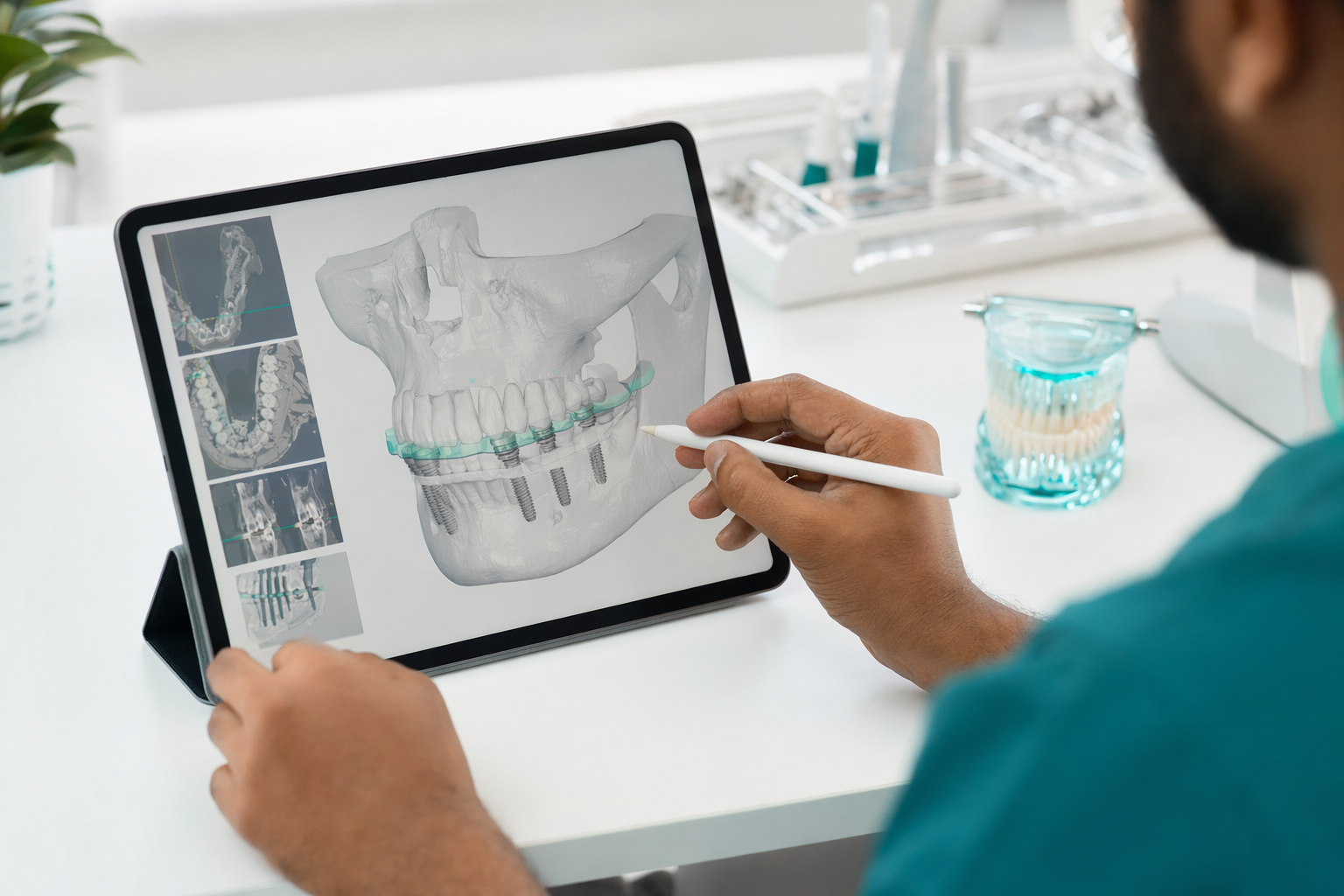
Step 1: Getting a plan (without pressure)
Dental implant treatment usually starts with a careful plan. Providers look at where the missing tooth is, how much supporting bone is available, and what type of implant restoration (a crown, bridge, or full-arch teeth) fits your situation.
A good first visit often includes an exam, X-rays, and sometimes a scan. This helps the provider estimate the timeline and whether you may need extra steps like a bone graft.
Clarity Implants is a free matching service, not a dental provider. We can help you compare options and find providers who offer clear explanations and support in the language you prefer. You can also ask questions and consider a second opinion, which is normal for a big decision.
Step 2: The implant placement (the post goes in)
The dental implant itself is a small titanium (or similar material) post placed into the jawbone. This post acts like an artificial tooth root.
During the procedure, the provider makes an opening in the gum, places the implant into the bone, and then closes the gum over it (sometimes with a temporary cover). Many people want to know if it hurts—providers typically use local anesthesia, and some offices offer additional comfort options. What you feel can vary by case and by the anesthesia approach.
After placement, the healing phase begins. This is where a key term comes in: osseointegration. Osseointegration is when the implant fuses with the bone over time so it can support the replacement tooth.
Step 3: Healing time (waiting for osseointegration)
Healing is not instant. Osseointegration often takes several months, but the exact timing depends on factors like bone quality and whether any extra procedures were done.
Some treatment plans use a “two-stage” approach: first the implant is placed, then later an abutment (a connector) is added, and then the final tooth restoration is made.
Other cases may use a “single-stage” approach where an abutment is placed at the same time as the implant. Your provider should explain which approach they recommend and why, including the expected timeline.
Step 4: Adding the connector (abutment) and building the tooth
Once the implant has integrated with the bone, the provider connects a piece called an abutment. An abutment is the part that sits on top of the implant and helps hold the final replacement tooth.
Next comes the restoration—the visible part you use to chew and smile. For different needs, this can include:
- A single crown for one missing tooth
- A bridge for several missing teeth
- Full-arch options (like “All-on-4” style or similar concepts) to replace teeth across an entire jaw
The provider will take measurements or digital scans to make the restoration fit comfortably. Then the final crown/bridge/arch teeth are attached.
Step 5: Follow-up, comfort, and long-term maintenance
After the final restoration is placed, follow-up visits help confirm healing and fit. Your provider should also explain practical care: brushing technique, cleaning around the implant-supported teeth, and what to watch for.
Care may also include routine professional cleanings and periodic checkups. This maintenance matters because implants still need good hygiene around the gumline.
If you’re comparing costs or treatment styles, it can help to review typical price ranges and how they vary by case: see Dental implant costs.
Costs and extra steps you may see during treatment
Dental implant cost is not one fixed number. Typical US all-in ranges often look like this (for planning only—actual price varies a lot by case, provider, and city/state):
- Single implant (post + crown): about $1,500 to $6,000
- Implant bridge / multiple teeth: about $3,000 to $15,000
- Full-arch (examples like All-on-4 style): about $20,000 to $50,000 per jaw
Some cases require extra steps. A common one is a bone graft. A bone graft is when the provider adds bone (from a graft material and/or another source) to help build enough support for the implant. If a graft is needed, it can add time and cost.
To understand how to pay, review options like dental insurance coverage, payment plans, and in some places Medicaid or other benefits. Coverage varies by state and plan, so ask providers what they can explain for your situation. You can also start by exploring How to get matched, or learn about Types of dental implants.
Dental implants usually involve a staged process: place the implant in bone, heal for integration, connect it with an abutment, then attach the final tooth, with timing and cost varying by your case.
Questions people ask
Does getting dental implants hurt?
Most implant placement is done with anesthesia, so discomfort during the procedure is usually limited. After treatment, some people feel soreness or swelling for a short time, but the experience varies by case and comfort options.
How long does the dental implant process take?
The full process can take several months in many cases because the implant needs time to integrate with the bone. Some plans may be faster, but your provider should explain the timeline they recommend and what steps it includes.
What is osseointegration?
Osseointegration is the natural process where the implant fuses with the jawbone. This helps the implant become stable enough to support the replacement tooth.
Why might I need a bone graft?
A bone graft may be suggested if there isn’t enough bone volume or strength to support an implant. It helps create the foundation needed for implant stability.
What’s the difference between a crown, a bridge, and full-arch teeth?
A crown replaces one missing tooth. A bridge replaces multiple adjacent teeth. Full-arch options replace most or all teeth in an entire jaw, often supported by multiple implants.
Keep reading
How Much Do Dental Implants Cost?
How Much Do Dental Implants Cost? — clear, honest information for people comparing dental implan
Read moreGuideHow to Pay for Dental Implants (Financing)
How to Pay for Dental Implants (Financing) — clear, honest information for people comparing dent
Read moreGuideDoes Insurance Cover Dental Implants?
Does Insurance Cover Dental Implants? — clear, honest information for people comparing dental im
Read moreNot sure where to start? We'll help — free.
Tell us your city and what you're looking for. We'll match you with vetted implant providers near you. No medical records, no pressure, and always free for patients.