Guide
Implants vs Dentures vs Bridges
Choosing a tooth replacement option can feel overwhelming. This guide compares dental implants, dentures, and bridges in clear, plain language—plus typical US costs and how to find a trusted provider in your language.
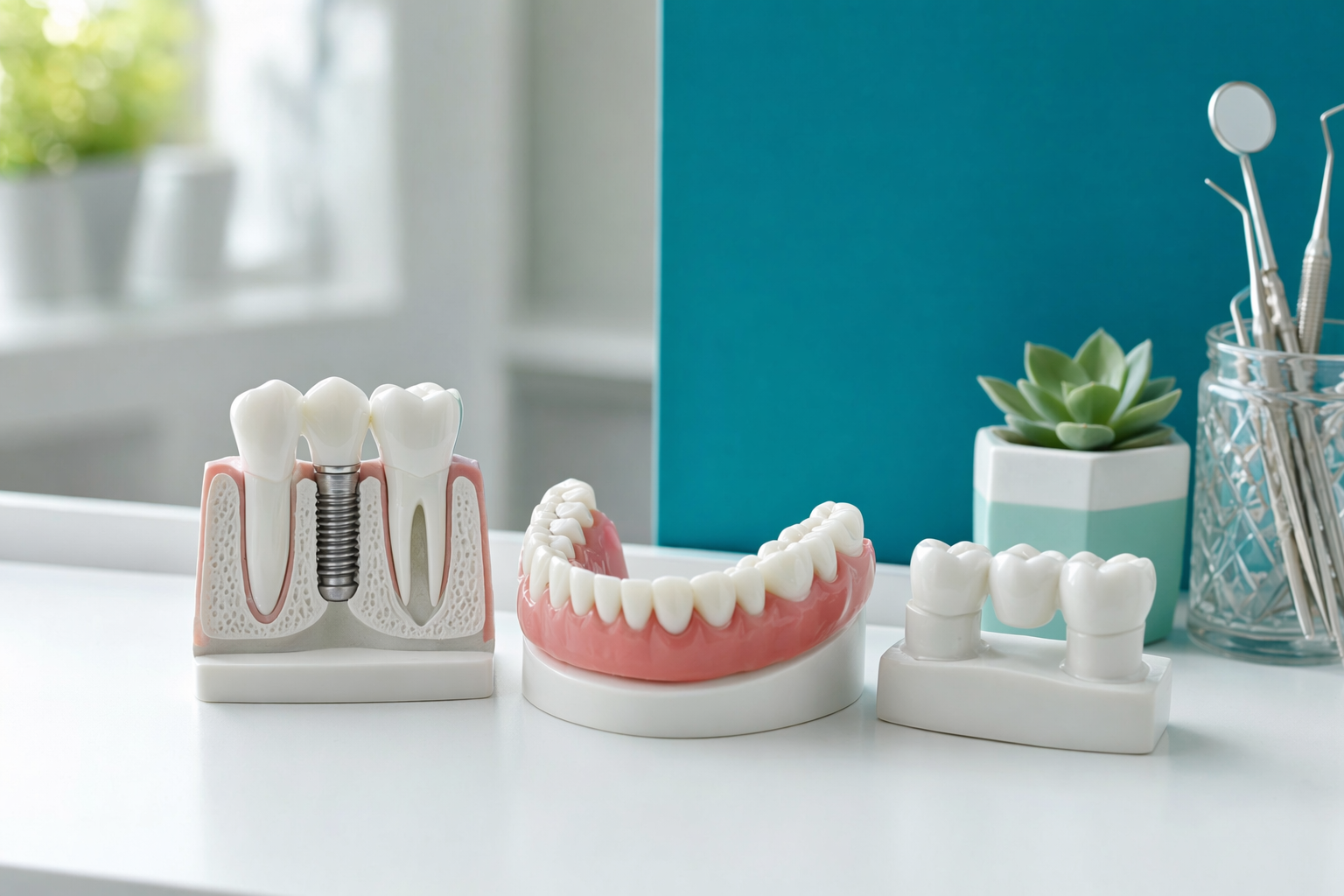
Quick overview: what each option does
Dental implants, dentures, and bridges all replace missing teeth, but they work in different ways and usually fit different needs.
An implant is an artificial tooth root placed in the bone. After healing, a crown (the visible tooth) is attached.
A denture replaces teeth using a removable appliance. A bridge replaces missing teeth using nearby teeth (or implants) as support, and it stays in place like a fixed restoration.
Dental implants: how they work, typical timeline, and common costs
Dental implants are designed to replace the tooth root. Your jaw bone grows around the implant in a process called osseointegration (when the implant “fuses” with bone). Then a crown is added.
Timeline varies by case. Many people plan for multiple visits over weeks to a few months, especially if there is a bone graft (bone-building) step or if you need extra preparation.
Typical US cost ranges vary a lot based on where you live and what you need. As a starting point, a single implant “all-in” is often roughly $1,500–$6,000. If you need additional steps (like a bone graft or special procedures), costs can be higher. For multiple teeth, an implant-supported bridge can be several thousand dollars to well over $10,000, and a full-arch option (like All-on-4) is often roughly $20,000–$50,000 per jaw. For exact numbers, providers must review your specific situation.
If language comfort matters, it’s often possible to find a provider who can explain options in your language. Clarity Implants can help you get matched.
Dentures: removable options and what to consider
Dentures are removable. They can be “partial” (for some missing teeth) or “full” (for all teeth in an upper or lower jaw). Dentures sit on the gums and are held in place using suction, fit, and (sometimes) clasps or attachments.
Many people choose dentures when they want a less invasive option or a lower upfront cost. Comfort and fit can take time, and you may need adjustments as your mouth changes.
Because dentures rely on the gum and remaining teeth (for partials), fit can change over time. Typical costs vary widely by type and whether adjustments or relines are needed. If you want cost planning help, implant vs denture costs can give you a clearer idea of what “common ranges” look like.
A provider can explain what is usually included and what follow-up visits might be needed. It’s normal to ask questions and get a second opinion.
Bridges: fixed replacement without removable teeth
A dental bridge replaces one or more missing teeth using support from nearby teeth. The false tooth (or teeth) are “bridged” into place, often with crowns on the teeth next to the gap.
Because bridges usually require shaping the neighboring teeth (called “abutment” teeth), they may not be the right choice if the nearby teeth are already weak or badly damaged.
Bridges are fixed, so you do not remove them day to day the way you remove dentures. However, long-term durability depends on your bite, oral health, and how the supporting teeth hold up.
Typical US cost ranges for bridges also vary a lot. As a broad guide, replacing several teeth with a bridge can often fall in the $3,000–$15,000 range, depending on materials and how many teeth are involved. See types of dental implant and tooth replacement options for more context on how different solutions compare.
How to compare options safely: questions that matter
It’s smart to compare options the same way you would compare major purchases: look at the full plan, not just the first number. Dental terms can be confusing, so ask for plain-language explanations.
Consider asking providers:
• What exactly is being replaced—one tooth, several teeth, or full arch?
• What steps are included (for example, extractions, healing time, or bone grafting if needed)?
• What is the expected timeline in weeks, not just visits?
• What are the likely follow-up visits for adjustments or healing?
• What are common alternatives (implant-supported options, dentures, bridges) for your situation?
You can also check learn more about implant options to understand the basics before you talk to a provider. Clarity Implants is a free matching service; we help you find an implant provider and get information that’s easier to understand—especially if you prefer another language.
How Clarity Implants can help you get matched
Clarity Implants is a free service that helps people in the US understand dental implant options and find an appropriate provider. We are not a dental provider or clinic, and we do not give medical advice.
If you are comparing implants vs dentures vs bridges, the next step is usually learning what each option would look like for your specific tooth replacement goals—then talking with a provider who explains clearly.
To get matched, you can start here: get matched. You can share general info like your name, city, and preferred language, and what you’re looking for. No medical records are required to use our service.
Dental implants replace the tooth root, dentures are removable, and bridges are fixed using nearby support—costs and timelines vary, so compare options with trusted providers and ask questions in plain language.
Questions people ask
Is an implant always better than dentures or bridges?
Not always. Implants, dentures, and bridges each have different trade-offs. The best choice depends on what teeth are missing, the health of surrounding teeth and bone, your preferences, and your budget. A provider can explain the options that fit your case.
Do dental implants hurt?
Many people describe discomfort that is managed with routine dental pain control, but every experience is different. Instead of guessing, ask a provider what to expect during and after the procedure, including typical aftercare and how discomfort is handled.
How long does it take to get teeth with implants?
Implants often require multiple steps, including healing time, so the process can take weeks to a few months. Your timeline can be longer if you need additional preparation like bone grafting.
What is the biggest cost difference between implants, dentures, and bridges?
Cost varies a lot by location, how many teeth are missing, and whether extra steps are needed. In general, single implants are often roughly $1,500–$6,000, dentures vary widely by type, and bridges can range from about $3,000–$15,000 for multiple teeth. These are typical planning ranges, not quotes.
Will my insurance or Medicaid cover implants or dentures?
Coverage rules differ by plan and by state. Some people have partial coverage for certain services, but implants may not be covered the same way everywhere. A provider’s billing team and your insurance/Medicaid plan can explain what’s covered.
How do I find a provider who can explain in my language?
You can ask about language support when you contact clinics, and choose a provider that can communicate clearly. With Clarity Implants, you can request matching with a provider who works better for your language preference.
Keep reading
How Much Do Dental Implants Cost?
How Much Do Dental Implants Cost? — clear, honest information for people comparing dental implan
Read moreGuideHow to Pay for Dental Implants (Financing)
How to Pay for Dental Implants (Financing) — clear, honest information for people comparing dent
Read moreGuideDoes Insurance Cover Dental Implants?
Does Insurance Cover Dental Implants? — clear, honest information for people comparing dental im
Read moreNot sure where to start? We'll help — free.
Tell us your city and what you're looking for. We'll match you with vetted implant providers near you. No medical records, no pressure, and always free for patients.