Guide
What is an abutment and crown?
An abutment and a crown are two parts that connect a dental implant to what you see in your mouth. Clarity Implants is a free matching + information service to help you understand options and find a provider in your language.
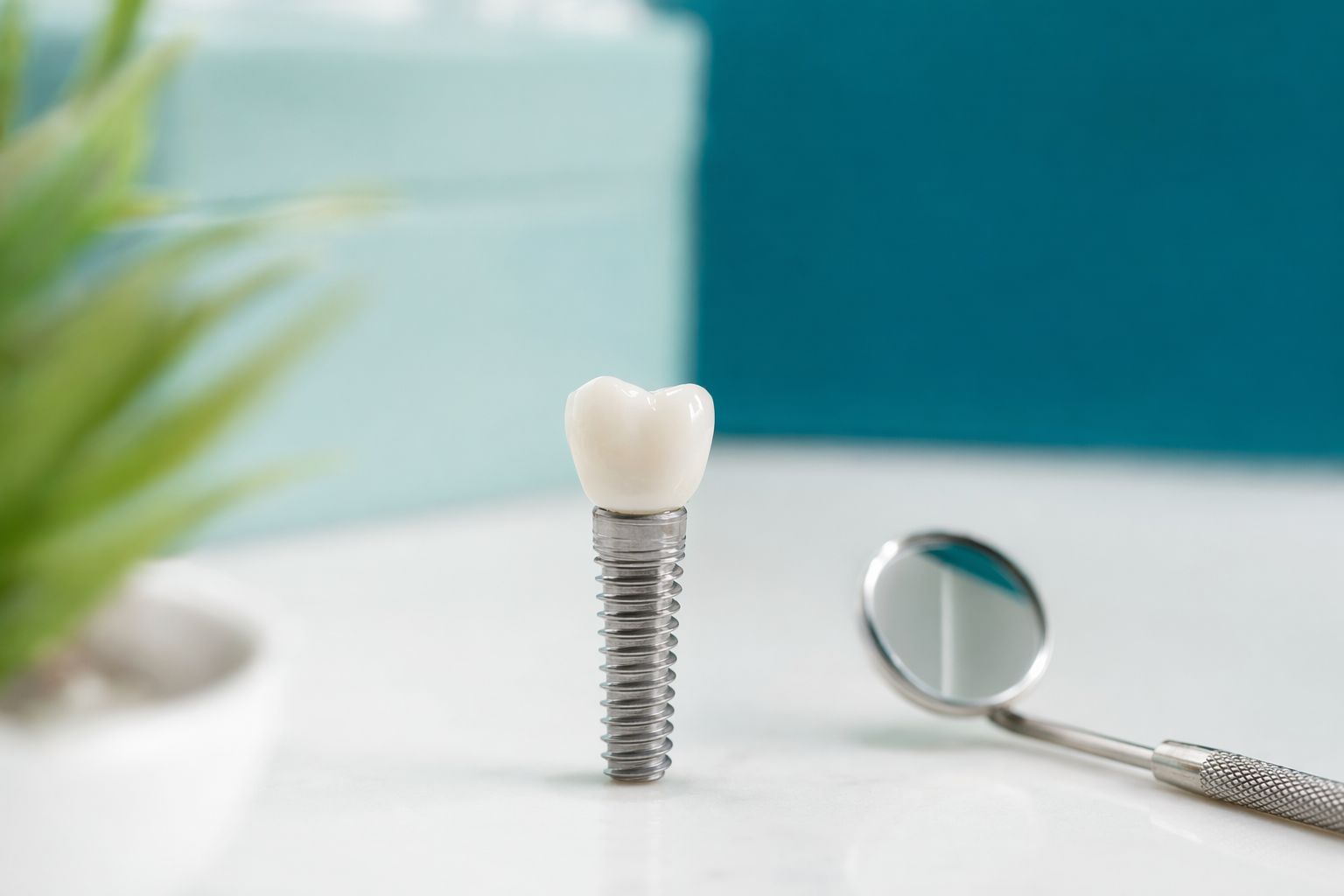
The simple idea: implant, abutment, crown
With dental implants, the work usually happens in layers. The implant is the part placed in the bone. Over time, it bonds with the bone in a process called osseointegration.
An abutment is the connector piece that sits on top of the implant. It acts like a small “bridge” between the implant and the crown.
A crown is the visible tooth-shaped part that restores the missing tooth. It is designed to look like a natural tooth and take on chewing forces.
What an abutment does (and why it matters)
An abutment’s main job is to connect the crown to the implant securely. In plain terms: the crown is built on top of the abutment, not directly on the implant.
Abutments can affect how the crown fits, how it sits in the bite, and how easily the restoration can be cleaned. Your provider may also consider where the implant is positioned and what type of crown is planned.
Because abutments are part of the “system,” it’s normal for prices and choices to vary from case to case. The real cost depends on the materials, the complexity of the case, and what steps are needed (for example, sometimes extra planning or additional procedures are required). For general planning, see implant costs before your visit.
What a crown is (and what you typically see)
A dental crown is the tooth-shaped part you can see in your mouth. It is usually made from materials such as ceramic or porcelain-like materials, and sometimes metal-based materials depending on the plan.
A crown needs to match your bite and sit well against nearby teeth and gums. It also needs to be strong enough for chewing. Your provider may discuss things like size, color, and shape so it blends with your smile.
Crown choices can affect cost. A crown as part of an implant restoration is often priced differently than other dental work. Typical total implant-related ranges in the US vary a lot by case, but a single implant “all-in” (implant + abutment + crown) is often roughly $1,500–$6,000, with higher costs in some situations.
How an abutment and crown are put together
In many implant treatments, the implant is placed first. After healing, the abutment is attached to the implant. Then the crown is made and placed on top of the abutment.
Some restorations may use a removable temporary tooth while you heal, depending on the plan. Your timeline can vary depending on factors like how many teeth are involved and whether additional steps are needed.
If you’re comparing providers, it can help to ask how they explain the “connection pieces” (abutment) and the “visible tooth” (crown), and what material options they offer. For practical next steps, you can also start with how to choose an implant provider.
Costs: what usually changes the price
The total price for an implant restoration depends on more than just the implant itself. Abutment type and crown material can change the cost, and the location of treatment in the mouth can matter.
Some people need additional steps before the final crown, such as bone grafting, more complex planning, or other supporting procedures. These “extra steps” can raise total cost even if the crown and abutment are straightforward.
Because pricing varies by city/state and by case, it’s best to think in typical ranges and ask your provider for an itemized estimate. For a broader view of typical ranges, see implant costs and then use get matched to find providers who explain pricing clearly in your language.
Questions to ask at your visit (so you understand the parts)
It’s reasonable to ask direct, plain questions. Good answers should explain the parts clearly and what you’re paying for, without pressure.
Consider asking:
- What type of abutment will I have, and what does it do in my case?
- What material is the crown made from, and why is that chosen for me?
- Is the restoration planned as a single tooth or part of a multi-tooth plan?
- What other steps might be needed before the final crown (for example, bone grafting), and how could that affect cost?
If you want help finding a provider who can explain things in a comfortable language, Clarity Implants is here to match you. We’re a free matching + information service, not a dental office.
An abutment connects a dental implant to the crown, which is the tooth-shaped part you see.
Questions people ask
Is the abutment the same thing as the implant?
No. The implant is placed into the bone. The abutment is the connector piece that sits on top of the implant and holds the crown.
Do I need a new abutment when I get a crown?
Usually, the abutment is part of the planned restoration for that implant and is used to support the crown. What’s used in your case depends on the provider’s plan and the condition of the implant and gums.
Will the crown look like a real tooth?
A crown is designed to look like a natural tooth in shape and color. Your provider typically chooses the shade and form to match nearby teeth.
How much do abutment and crown affect the total cost?
They can affect total cost because different materials and designs can be priced differently. Also, extra steps (like bone grafting) can change the overall price, so the total varies a lot by case.
Does insurance or Medicaid cover the crown and implant parts?
Coverage varies by plan and by state, and implant coverage is not the same everywhere. A provider’s office can often explain what your plan may or may not cover based on their billing process.
Keep reading
How Much Do Dental Implants Cost?
How Much Do Dental Implants Cost? — clear, honest information for people comparing dental implan
Read moreGuideHow to Pay for Dental Implants (Financing)
How to Pay for Dental Implants (Financing) — clear, honest information for people comparing dent
Read moreGuideDoes Insurance Cover Dental Implants?
Does Insurance Cover Dental Implants? — clear, honest information for people comparing dental im
Read moreNot sure where to start? We'll help — free.
Tell us your city and what you're looking for. We'll match you with vetted implant providers near you. No medical records, no pressure, and always free for patients.