A Clarity Implants story (anonymized)
Affording a full-arch on a tight budget
This is an anonymized story about how one person planned for full-arch dental implants with a tight budget. Clarity Implants is a free matching service that helped them understand options and connect with providers—no pressure, no promises.
A big need, a tight budget
They were missing most or all teeth on one jaw and felt overwhelmed by what came next. Full-arch dental implants can cost a lot in the US, and they wanted a clear picture before making any decisions.
They also felt more comfortable reading in another language, so they needed information that explained common implant terms in plain words. They didn’t want “medical forms” or questions about their health—just straightforward guidance on what options exist and what they might reasonably expect to pay.
They started with research, but found it hard to compare providers because each office explained costs differently (for example, some talked about surgery steps separately, while others bundled them).
What “full-arch” usually means (in plain language)
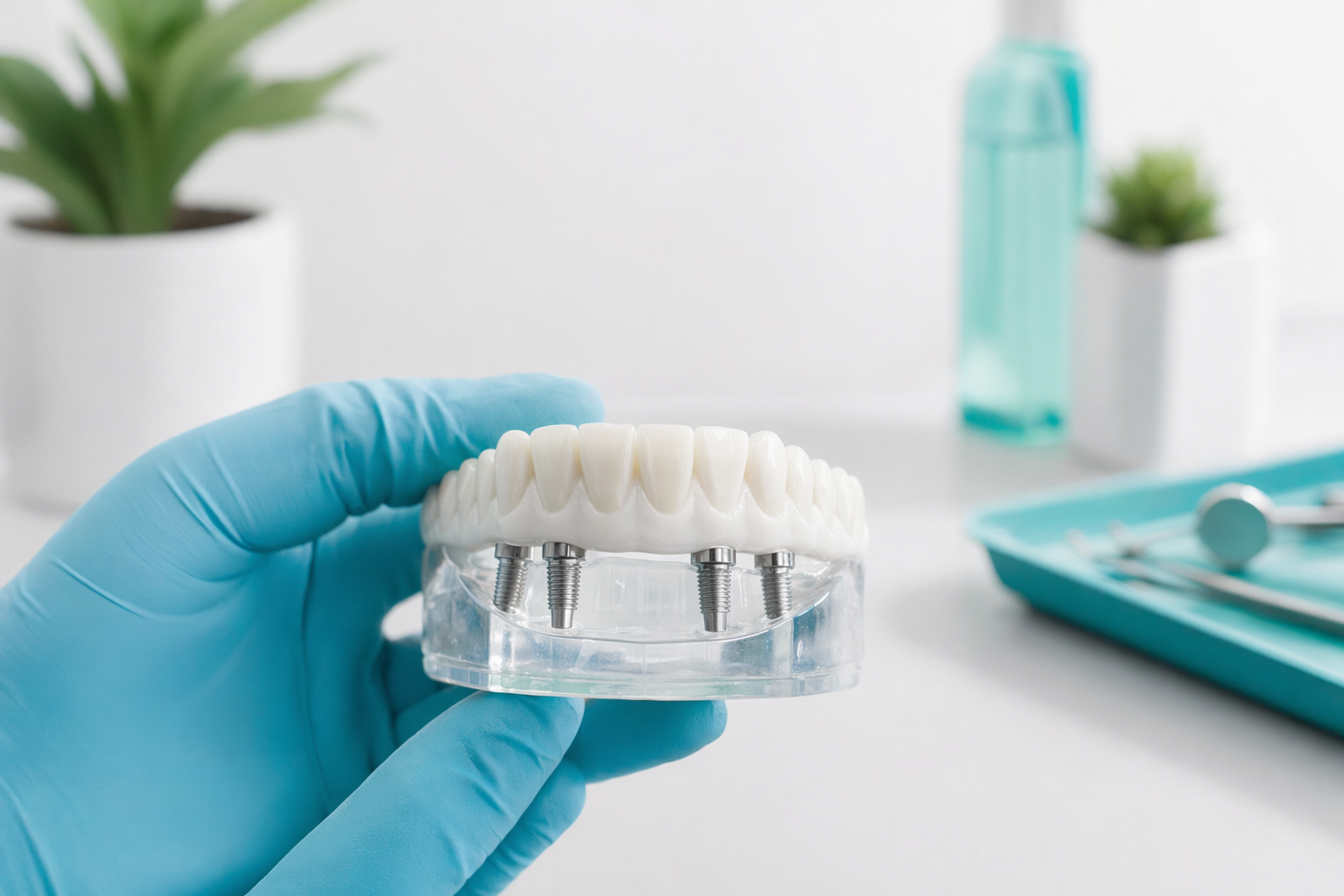
In general, a full-arch implant approach is designed to support a complete set of teeth (a fixed bridge or denture-like teeth) for an entire jaw.
A common version is called “All-on-4” (or similar approaches). Typically, it uses several dental implants placed in the bone, then supports a fixed prosthesis. Another term you might hear is osseointegration—this is when the implant post bonds with the jawbone over time.
If the jawbone is not thick enough, some people need extra steps like a bone graft first. That can affect the timeline and cost, so it was important for them to understand what might apply to their situation.
They didn’t ask Clarity Implants for medical advice. Instead, they looked for an organized way to ask providers the right questions and compare the full “plan,” not just the implant parts.
Using a free matching service to understand options
Clarity Implants is a free matching + information service. We are not a dental office or provider, and we do not give medical or dental advice.
The goal was simple: help them understand the major options for full-arch implants and connect with providers who can explain the plan clearly. They used plain-language resources and a guided process to get from “I’m missing teeth” to “I know what to ask.”
To get matched, they shared only general details—like their city, preferred language, and what kind of care they were researching. Clarity Implants does not collect diagnosis, medical history, medications, or x-rays.
They also used the story pages on our site to see how other people prepared. They found it reassuring that real-life planning often includes budget trade-offs, questions about extra steps, and careful comparison.
Realistic cost planning (typical ranges, varies a lot)
For full-arch dental implants in the US, costs vary widely depending on the provider, location, how many implants are needed, the type of teeth used, and whether additional steps (like a bone graft or extractions) are part of the plan.
As a planning guide, here are typical all-in ranges people often see: full-arch like All-on-4 is commonly around $20,000–$50,000 per jaw. Some cases may be lower or higher, but this range can help you set expectations when you’re budgeting.
They also reviewed the idea that “all-in” matters. Two providers might quote different amounts because one includes certain lab steps, extra appointments, or follow-up care, while the other breaks things out separately.
To learn more about pricing and what can change, they referenced implant costs and used get-matched to compare options through providers who could explain their own pricing clearly.
How they stretched their budget without rushing
Because the budget was tight, they focused on clarity over speed. They asked providers for the full plan in writing and reviewed what was included (implants, teeth/prosthesis, surgery steps, and common follow-up visits). They also asked whether extra steps could be needed and how those would change the cost and timeline.
They treated the consultation as an opportunity to understand choices: which full-arch approach might fit, what happens if a bone graft is needed, and what the replacement teeth are made of and how they’re cared for.
Since this was a big, expensive decision, they also planned time to get a second opinion. In general, taking time to compare options can help you feel more confident—even when the budget is limited.
After they understood the likely range and the steps that could affect the final total, they coordinated a plan they could afford and a schedule that made sense for their life.
What helped them most: language and a structured set of questions
They said the biggest difference was being able to read and discuss the process in a way that felt clear. Dental terms can be confusing at first, and learning them in plain language made it easier to compare providers fairly.
They also used a structured approach to questions during consultations. Instead of only asking, “What does it cost?” they asked what the price includes and what could raise or lower it (like extra steps). That helped them avoid surprises later.
Most importantly, they felt supported without pressure. Clarity Implants is a free matching service, not a guarantee of outcomes or a fixed price. Their next steps depended on what providers explained after a clinical evaluation.
If you’re in a similar situation, you can explore more anonymized experiences in stories and start matching at get-matched.
A person on a tight budget planned for full-arch implants by learning common options, reviewing typical cost ranges, and using Clarity Implants’ free matching service to connect with providers that explained next steps in plain language.
Questions people ask
How much does a full-arch implant cost in the US?
Typical full-arch costs (for approaches like All-on-4) are often around $20,000–$50,000 per jaw, but prices vary a lot by city/state, the specific plan, and whether extra steps (like bone grafting or extractions) are needed. Any exact total depends on the individual case and what a provider includes in the package.
Why do full-arch implant prices change so much between providers?
Costs can differ based on the number and placement of implants, the type of prosthesis (the teeth set), lab and materials, whether surgery steps are included, and follow-up visits. Some providers bundle more items into one total, while others list them separately.
Is Clarity Implants a dental clinic or provider?
No. Clarity Implants is a free matching + information service. We help people understand options and find providers, but we do not provide dental care and we do not give medical or dental advice.
Do you need my medical history or x-rays to match me?
No. We do not collect diagnosis, medical history, medications, or x-rays. We focus on general details like your location and what you’re looking for, then connect you with providers who can explain next steps in their own consultations.
Does “osseointegration” mean the implant will definitely work?
Osseointegration is the general process where the implant post bonds with the jawbone over time. It’s an important step, but no one can promise outcomes. A provider can explain what they recommend based on your situation after a clinical evaluation.
Not sure where to start? We'll help — free.
Tell us your city and what you're looking for. We'll match you with vetted implant providers near you. No medical records, no pressure, and always free for patients.