Implant type
All-on-4 Implants: cost, process, and who it suits
All-on-4 implants are a way to replace an entire row of teeth with a fixed set of teeth supported by 4 implants. Clarity Implants is a free matching service to help you understand the process, typical costs, and how to find a provider near you.
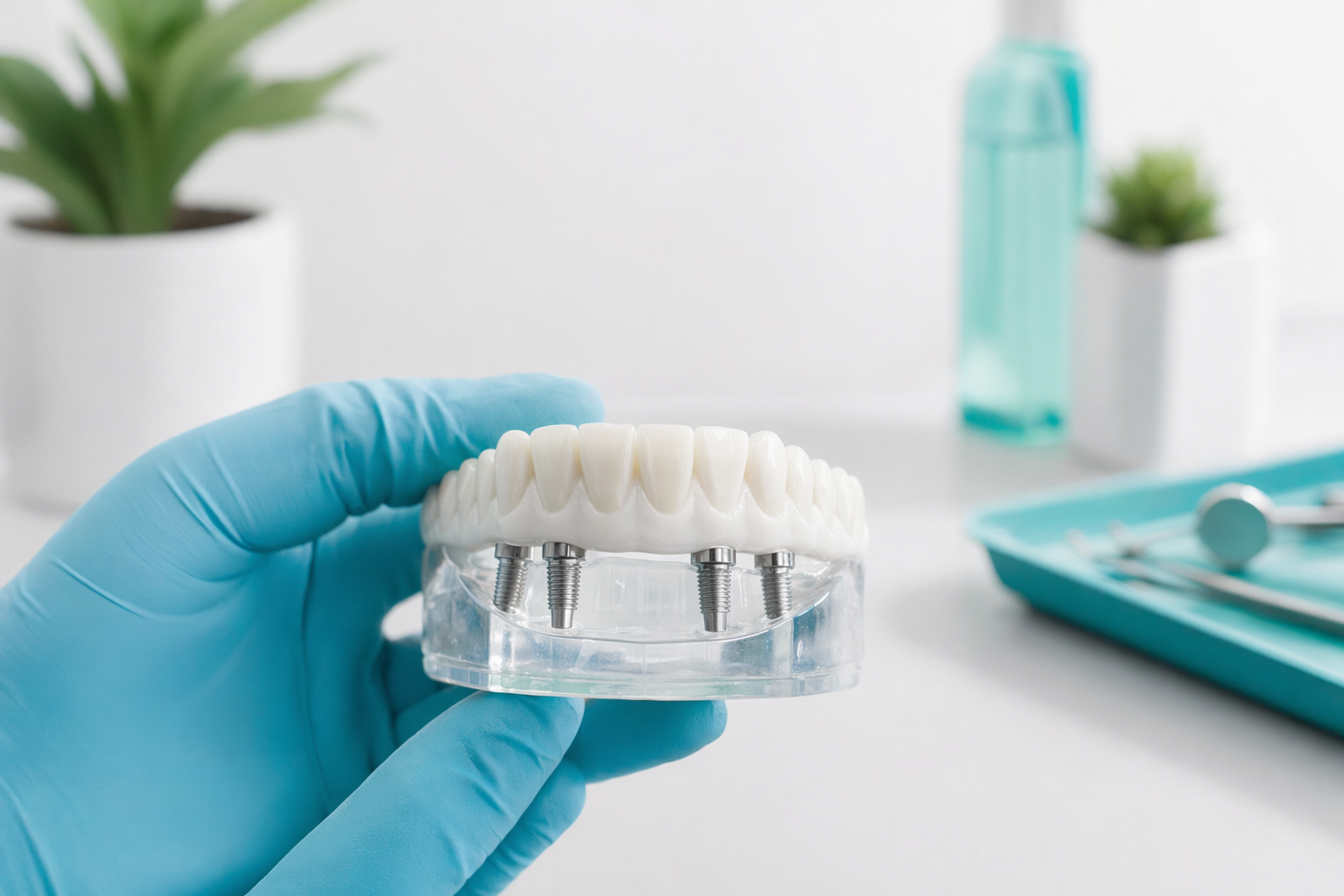
What All-on-4 implants are (plain language)
All-on-4 is a type of full-arch implant treatment. “Full arch” means replacing all (or most) teeth in one upper or lower jaw.
The idea is to place 4 dental implants in the jawbone and attach a full set of replacement teeth to them. Two implants are often placed more forward, and two may be placed at an angle to help use available bone.
An implant is a small titanium (or similar) post that sits in the bone. Over time, the implant can fuse with the jawbone in a process called osseointegration. “Fixed teeth” usually means the teeth are attached in a way that you can’t remove them like a typical denture, though your provider may still remove components for cleaning or maintenance.
Clarity Implants is a free matching and information service, not a dental provider. We can help you compare options and find questions to ask, but we don’t diagnose or recommend what you should personally do.
Who All-on-4 is often a good fit for
All-on-4 may be an option people consider when they need to replace an entire upper or lower row of teeth, especially when traditional options would be less practical. Some people also explore it if they want a more stable alternative to removable dentures.
Because every mouth and bone situation is different, providers evaluate whether there is enough bone and the right structure for implants. Sometimes a procedure like a bone graft or additional planning is needed, depending on the case.
This is not medical advice. It’s general education. A provider will explain whether All-on-4 is appropriate for you after an exam and imaging.
If you want care in your language, that can matter. When you request a match through get-matched, you can tell us what languages you prefer so the provider you see may be able to communicate more clearly.
The typical process (what usually happens, step by step)
Every clinic is different, but many All-on-4 journeys follow a similar flow. If you’d like a deeper, general walkthrough, see how the implant procedure works.
Step 1: Planning and evaluation. The provider checks your mouth, the jawbone, and overall fit. They may discuss whether extra steps are needed.
Step 2: Implant placement. Implants are placed in the jaw. Many people are able to leave the same day with a temporary set, depending on the plan.
Step 3: Healing and osseointegration. Your jawbone needs time to fuse with the implants. This is the part where healing matters.
Step 4: Final teeth. Once healing is complete, the permanent set of teeth is made and attached.
Pain levels and timelines vary. Some people describe discomfort as manageable, but you should discuss expected comfort and recovery with the provider you choose. If you’re comparing types of implants, browse implant types.
How much All-on-4 implants typically cost in the US
Cost varies a lot in the US. It depends on your city/state, your anatomy, whether you need extra procedures (like bone grafting), the brand and materials used, and how the clinic structures the plan.
As a planning guide, full-arch “like All-on-4” treatments are often roughly $20,000–$50,000 per jaw, all-in, though this range can be higher or lower depending on the case and what’s included.
To help you budget, ask clinics to explain what “all-in” includes. Common cost components may be:
- Implants and placement
- Temporary teeth (if planned)
- Final teeth
- Imaging and planning
- Follow-up visits
- Any additional procedures (if needed)
If you’re comparing costs across different options, the general estimates on implant costs can help you understand what drives pricing.
This site does not provide quotes or guarantees. Any real price you’re offered should come from a provider after their evaluation.
How to choose a provider you can trust
It’s normal to take time when choosing implant care. A good provider should be willing to explain the plan clearly, in plain language, and help you understand your options.
When you call or visit, consider asking:
- What is included in the quoted price?
- Will I get temporary teeth, and when?
- How do you handle healing and follow-up visits?
- Do I need any extra steps like bone grafting?
- What materials are used for the teeth?
- What are the payment options?
You can also request a second opinion if you feel unsure. If language is a barrier, look for clinics that can communicate in your language or use an interpreter.
Clarity Implants is here to help you find providers in your area through a free matching process. Use get-matched to tell us what you’re looking for and how to reach you. We can help you connect with providers, but we don’t provide medical treatment or collect medical history.
Payment options and insurance (what’s typical)
Many people pay for implants through a mix of methods. Insurance may cover part of care in some situations, but implant coverage varies widely by plan and state.
Because rules differ, your provider’s billing team can explain what your specific plan may cover and what it usually does not. If you don’t have insurance, ask about payment plans and third-party financing options.
If you’re cost-conscious, you can ask for a written estimate that breaks down what is included, and whether any extra procedures could change the total. Clear planning helps avoid surprises.
Clarity Implants does not charge patients for our service. Our matching and information support is free.
All-on-4 replaces a whole upper or lower tooth row with fixed teeth supported by 4 implants, with typical US costs often around $20,000–$50,000 per jaw, and Clarity Implants helps you find a trusted provider near you—free.
Questions people ask
Is All-on-4 the same as getting “full dentures”?
No. Dentures sit on the gums, while All-on-4 is supported by dental implants in the jawbone. Implants can help provide a more stable option, but the right choice depends on your bone and overall situation.
Will All-on-4 always work without bone grafting?
Not always. Some people may need extra preparation like a bone graft or other steps depending on jawbone conditions. A provider can explain what applies to your case after evaluation.
How long does the All-on-4 process usually take?
It usually happens in stages: implant placement, a healing period for osseointegration (bone fusing to the implants), and then final teeth. The overall timeline varies by clinic and individual healing.
Does it hurt?
Pain and discomfort vary from person to person. Many clinics provide options for comfort during and after procedures. Ask a provider what they expect for your specific situation and what pain-control options are available.
What should I ask before I schedule All-on-4?
Ask what the quote includes (implants, temporary teeth, final teeth, follow-ups), whether you might need extra procedures, what materials are used, and what the payment options are. A clear written plan can help you compare choices.
How can I find an All-on-4 provider near me?
Clarity Implants is a free matching service. Use [get-matched](/get-matched/) to tell us what you need and your preferred language so we can connect you with providers in your area. We’re not a dental clinic and we don’t provide treatment.
Other implant options
Single Tooth Dental Implant: cost, process, and who it suits
What single tooth dental implant is, who it's a good fit for, a general cost range, and how to f
Read moreImplant typeMultiple Tooth Implants (Implant Bridge): cost, process, and who it suits
What multiple tooth implants (implant bridge) is, who it's a good fit for, a general cost range,
Read moreImplant typeFull-Arch Implants (Full Mouth): cost, process, and who it suits
What full-arch implants (full mouth) is, who it's a good fit for, a general cost range, and how
Read moreNot sure where to start? We'll help — free.
Tell us your city and what you're looking for. We'll match you with vetted implant providers near you. No medical records, no pressure, and always free for patients.